2026-10-24 ·
Creosote Buildup Signs In Older West New York Brick Chimneys
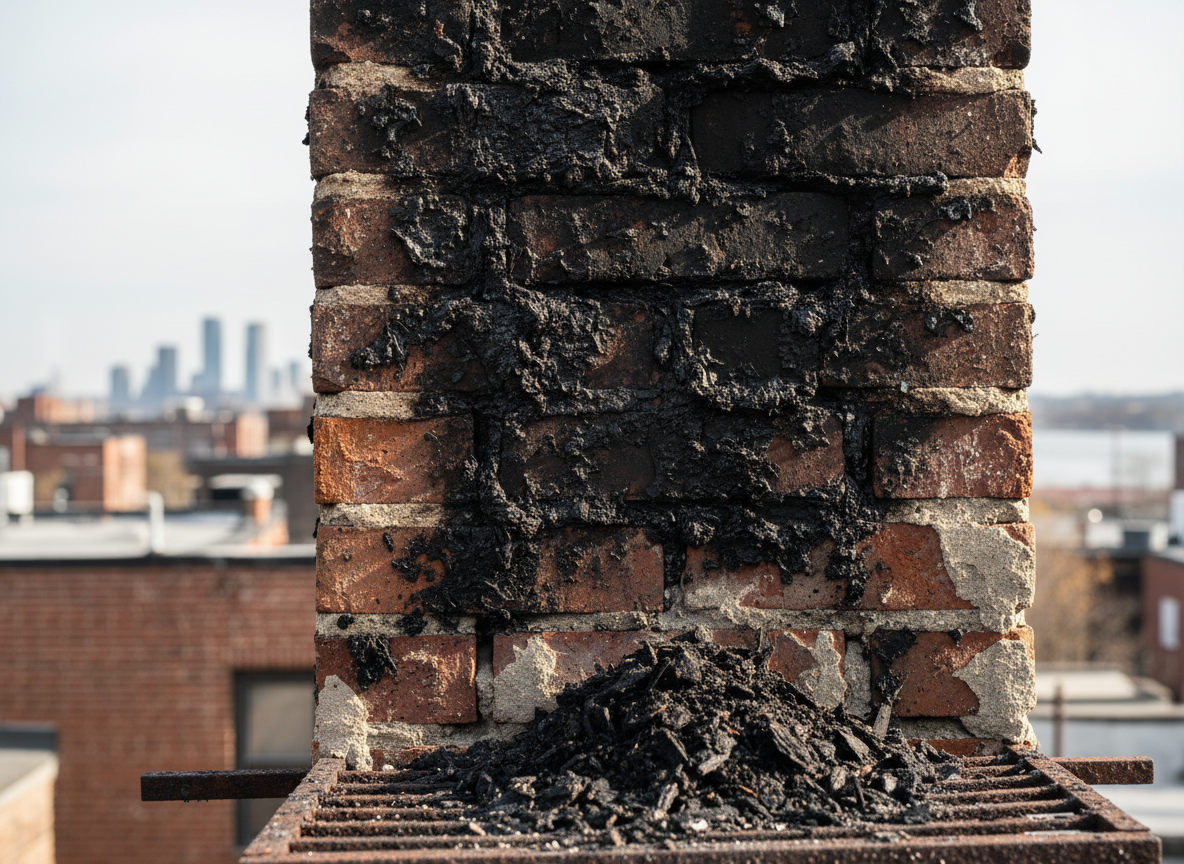
Creosote buildup in older West New York brick chimneys typically shows as thick, glossy black flakes or tar-like layers inside the flue after 8–12 months of regular use during cold winters. Homeowners in Downtown West New York and The Heights notice reduced draft, smoky odors on the first floor, and dark stains around the damper within one heating season when temperatures drop below freezing.
Visible Deposits Inside the Flue
Creosote forms when wood smoke cools against brick walls in older chimneys common throughout Hudson County. In West New York homes built before 1950, the porous brick traps moisture from the humid subtropical climate, turning light Stage 1 creosote into sticky Stage 2 deposits within weeks of heavy winter burning. Inspectors often find 1/8-inch layers near the smoke chamber after only two months of daily fires. These deposits appear as shiny black crusts that flake off when scraped, especially after the hot summers raise flue temperatures and loosen material. Residents near North Hudson Park report seeing these flakes fall into fireboxes following windy days off the Hudson River Waterfront. Checking with a flashlight from the cleanout door reveals buildup faster than waiting for odors to appear downstairs.
Draft Problems and Odor Patterns
Reduced draft ranks as the most reliable early sign in brick chimneys serving Union City and North Bergen homes. Creosote narrows the flue by 20–30 percent, forcing smoke back into living spaces when outside temperatures fall below 30°F. West New York operators see this pattern spike from November through February because cold air pulls harder while creosote from softwood fires hardens quickly. A second indicator is the sharp, acrid smell that lingers in The Heights row houses even after the fire is out. This odor travels through mortar cracks widened by freeze-thaw cycles along the Hudson River corridor. Homeowners who burn 3–4 cords per season notice the smell returning within days of each new fire once deposits exceed 1/4 inch.
Structural Effects on Older Brickwork
Creosote acids attack lime mortar in pre-war chimneys found along Boulevard East and Bergenline Avenue. The humid summers keep moisture trapped, allowing the acids to eat joints at rates that expose brick edges within 3–5 years of unchecked buildup. Wind patterns off the river push smoke and heat unevenly, concentrating creosote on the north-facing flue wall where it stays wet longer. This creates spalling bricks and loose crowns that leak during spring rains. In older West New York stock, the combination of cold winters and river humidity shortens safe service life between cleanings to roughly 10–14 months instead of the 18–24 months common inland.
Recommended Next Steps for Local Homeowners
Schedule a chimney inspection service before the next heating season if any of these signs appear. Professional chimney cleaning service removes Stage 2 deposits that standard brushes miss in narrow flues. For damaged brick, brick chimney repair restores the structure before creosote restarts the cycle. Review Winter Chimney Maintenance Tips For West New York Homes to adjust burning habits that limit new buildup. Call Haven Restore at 55-1 Riverwalk Pl anytime for 24/7 assessment in West New York, Union City, or North Bergen.