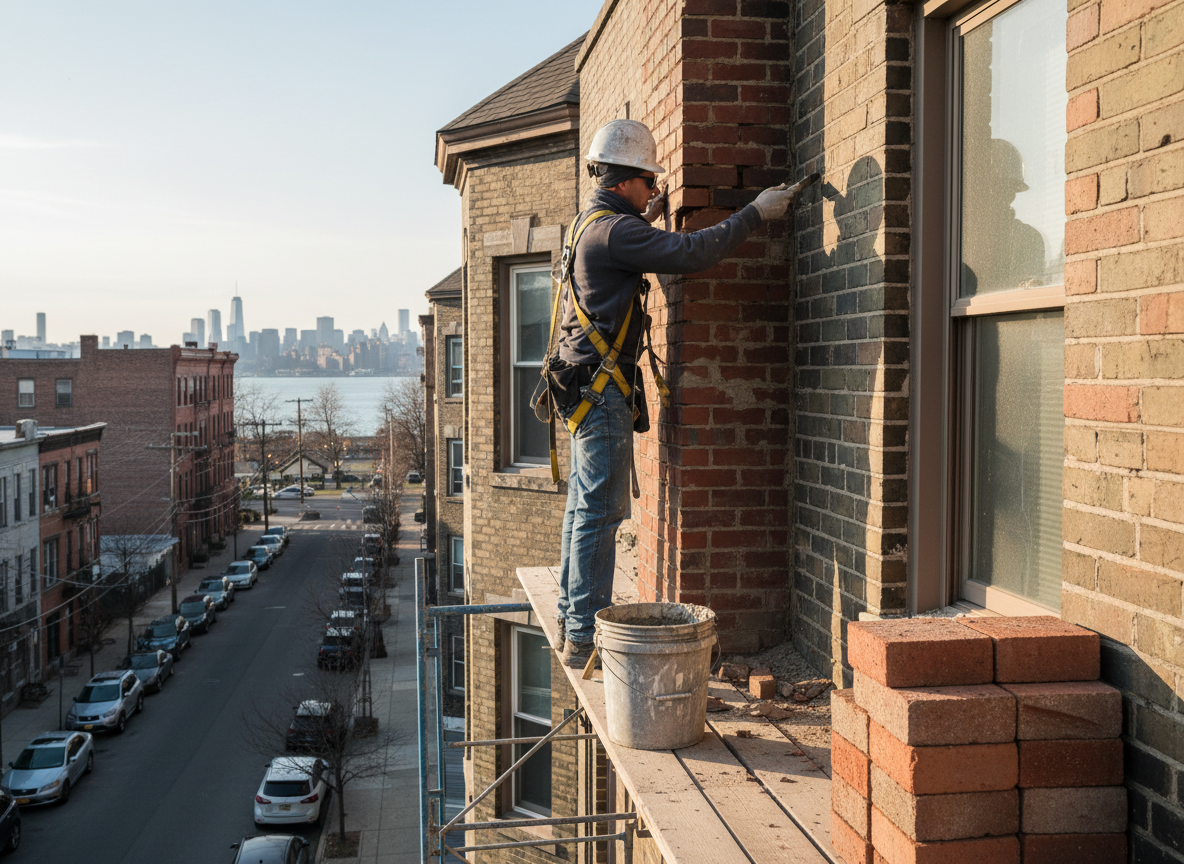
West New York sits in Hudson County along the Hudson River Waterfront, where many homes in The Heights and Downtown West New York date back to the early 1900s with original brick chimneys. These structures face repeated freeze-thaw cycles during cold winters that expand moisture trapped in mortar joints, leading to spalling and loose bricks. Hot humid summers add further stress through thermal expansion. Repairs often require matching historic brick and lime-based mortar rather than modern Portland mixes to avoid future cracking from differential movement.
Proximity to the river increases salt air exposure and wind-driven rain that penetrates chimney crowns and flashing. In neighborhoods like The Heights, shared walls and tight lot lines mean scaffolding must be set carefully to avoid neighbor disputes or code issues with Hudson County inspectors. Technicians routinely find deteriorated clay flue liners from years of coal and oil heating that now violate current venting standards when gas appliances are in use. Proper repair includes installing new stainless liners where needed and sealing the crown with a breathable masonry coating.
Homeowners in Union City and North Bergen often discover issues only after water stains appear on interior walls during spring thaws. Work here demands attention to the slope of nearby terrain that directs runoff toward foundations, which can worsen chimney base deterioration. Matching the original brick texture and color is essential in these visible waterfront locations to maintain property value without triggering historic review delays.
Technician insight
In West New York, the thing that catches most people out with brick chimney repair is how quickly the freeze-thaw cycles from cold winters destroy mortar in the older brick homes of The Heights once river moisture gets behind the flashing. Homeowners wait until interior staining shows up and then discover the crown has been open for years.
The Heights Chimney Base Failure
Water stains appeared on a second-floor ceiling in a 1920s row house near North Hudson Park after a heavy winter thaw. Inspection revealed deteriorated mortar at the chimney base where runoff from the sloped lot had pooled against the foundation. We rebuilt the lower four courses with matching brick and lime mortar, added new step flashing, and sealed the crown. No further leaks occurred the following winter.
How it works
- 1
Initial Site Assessment
Inspect the full chimney height from roof to foundation, checking for spalled bricks, open mortar joints, and liner condition while noting exposure to the Hudson River winds.
- 2
Masonry and Flue Evaluation
Remove loose material, test mortar integrity, and scope the flue to identify points where cold weather damage has allowed water intrusion.
- 3
Targeted Brick and Mortar Repair
Tuck-point with compatible lime mortar, replace damaged bricks with matching units, and rebuild the crown to shed water away from the structure.
- 4
Final Sealing and Inspection
Apply breathable water repellent, reinstall or upgrade flashing, and confirm proper draft before leaving the site.
Pricing
Upfront quotes provided after on-site inspection; final cost depends on height, extent of brick damage, and any liner work required.