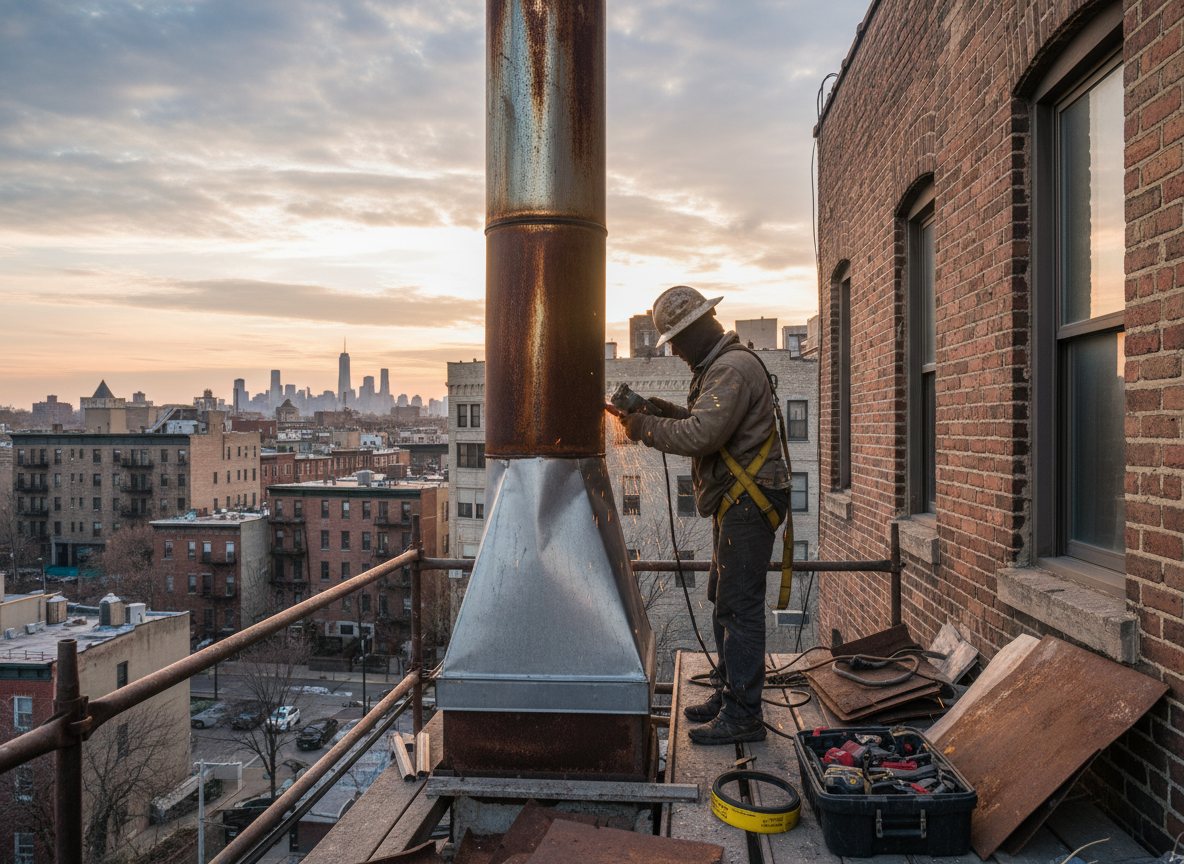
Metal chimneys in West New York face constant stress from the humid subtropical climate, where hot summers accelerate exterior rust while cold winters drive freeze-thaw cycles that crack seams and joints. Homes in The Heights and Downtown West New York often feature older metal flue systems tied into brick masonry that has settled unevenly near the Hudson River Waterfront. Moisture from the river and frequent coastal humidity penetrates small gaps, leading to internal corrosion that spreads faster than on inland properties in Union City or North Bergen.
When repairing metal chimneys here, technicians must account for thermal expansion differences between the metal liner and surrounding masonry, especially on roofs exposed to prevailing winds off the Hudson. Common failures include deteriorated rain caps, rusted slip joints, and pinhole leaks in single-wall pipe that allow creosote-laden condensation to drip into attics. Proper repair involves isolating the damaged section, installing stainless steel replacement pipe rated for the existing fuel type, and sealing transitions with high-temperature silicone that withstands the local temperature swings without failing within a season.
Code considerations in Hudson County require maintaining proper clearances to combustibles and ensuring the repaired chimney meets current venting standards for the appliance it serves. Skipping a full liner inspection after repair often leaves hidden corrosion higher in the stack that reappears during the next cold snap. Technicians working from the Riverwalk Pl base routinely check for these issues because metal systems in waterfront-adjacent buildings deteriorate from the inside out faster than visible exterior rust suggests.
Technician insight
In West New York, the thing that catches most people out with metal chimney repair is hidden internal rust on single-wall pipe that only shows after a heavy winter rain soaks through to the attic. Homes built close to the Hudson River Waterfront in The Heights experience faster corrosion because salt-tinged humidity gets pulled into the flue during cold-weather downdrafts. Checking the entire stack, not just the visible top, prevents repeat leaks the following season.
Leaking Metal Flue After Winter Freeze
Water stains appeared on a ceiling in a Downtown West New York row house following repeated freeze-thaw cycles. Inspection revealed pinhole corrosion in the metal chimney liner where condensation had pooled. Damaged sections were replaced with new stainless pipe and all joints resealed, restoring draft without further interior moisture issues.
How it works
- 1
Initial Site Assessment
Examine the metal chimney exterior and accessible interior sections from the roof and cleanout, noting rust patterns, joint separation, and water intrusion points common in The Heights homes.
- 2
Component Isolation
Remove damaged metal sections while protecting surrounding masonry and flashing, confirming the remaining pipe retains structural integrity against local wind loads.
- 3
Material Replacement
Install new stainless steel pipe segments matched to the original gauge and fuel type, securing all connections to resist expansion from summer heat and winter contraction.
- 4
Sealing and Testing
Apply appropriate high-temperature sealant at transitions and perform a smoke test to verify no exhaust leakage before restoring full operation.
Pricing
Upfront quotes provided after on-site inspection; final cost depends on chimney height, extent of corrosion, and access conditions typical in older Hudson County buildings.