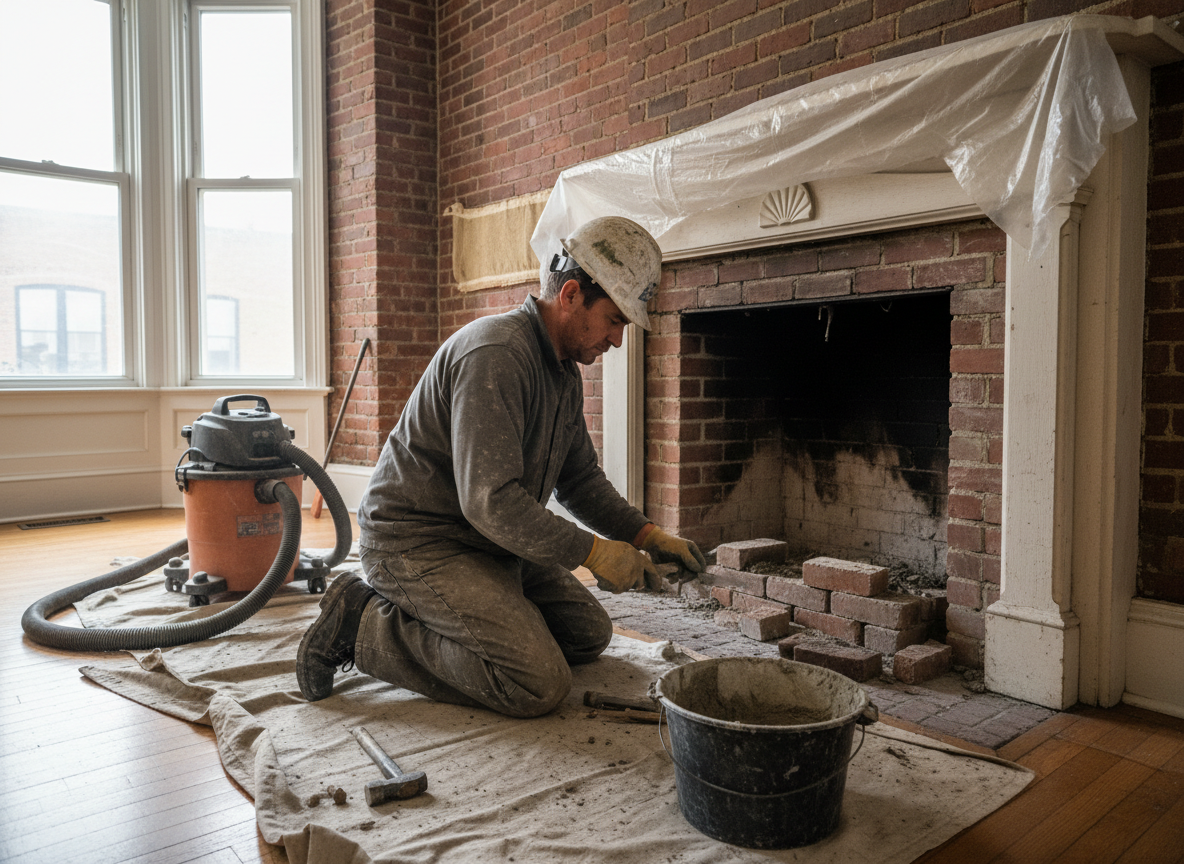
Fireplace repair in West New York often involves masonry in homes built before the 1960s that line The Heights and Downtown West New York. Cold winters pull moisture from the nearby Hudson River Waterfront into brick and mortar joints, causing spalling and flue separation that allows smoke to enter living spaces. Hot humid summers accelerate creosote hardening inside the flue, which then cracks when temperatures drop. Technicians working from 55-1 Riverwalk Pl see these patterns weekly and must open the firebox to inspect the smoke chamber rather than relying on top-down camera views alone.
In Hudson County row homes near North Hudson Park, shared chimney stacks between neighboring properties create hidden draft issues. When one unit's fireplace is repaired without addressing the common wall, negative pressure from the adjacent home can still pull smoke back indoors. Repair crews routinely check for proper lining continuity and install stainless steel inserts sized to the existing flue rather than assuming a standard 8x8 or 8x12 opening. This prevents callbacks that occur when only the visible firebox is pointed without addressing the full stack height.
Winter calls spike once temperatures fall below freezing because frozen condensate expands inside uncapped flues along the Hudson River Waterfront. Homeowners in Union City and North Bergen often report the same symptom: a persistent smell of soot after the first cold snap. The fix requires removing loose brick, repointing with type N mortar matched to the original, and installing a rain cap that allows airflow while blocking wind-driven rain common in this humid subtropical climate.
Technician insight
In West New York the thing that catches most people out with fireplace repair is the shared chimney stacks in The Heights row homes. Moisture from the Hudson River Waterfront migrates into the common wall and loosens mortar on the neighbor side, so a repair that only addresses one firebox often fails the first cold snap.
Firebox Cracking Near North Hudson Park
Homeowner in Downtown West New York noticed smoke entering the room after the first freeze. Inspection revealed spalled brick and separated flue lining caused by river moisture in the older masonry. Crew removed damaged brick, repointed with matching mortar, and installed a properly sized stainless liner. Draft test passed and the fireplace has operated without issue through the winter.
How it works
- 1
Initial Assessment
Technician arrives at the West New York address and inspects the firebox, damper, and visible flue sections for cracks and creosote buildup.
- 2
Flue Evaluation
Camera inspection runs the full height to check lining condition, noting any shared-stack complications common in The Heights row homes.
- 3
Repair Execution
Masonry repair or insert installation is completed using materials suited to Hudson County winter freeze-thaw cycles.
- 4
Final Testing
Draft test and smoke test confirm proper exhaust before leaving the job site.
Pricing
Upfront quotes provided after on-site inspection; cost driven by flue height, insert versus masonry work, and shared-stack access.