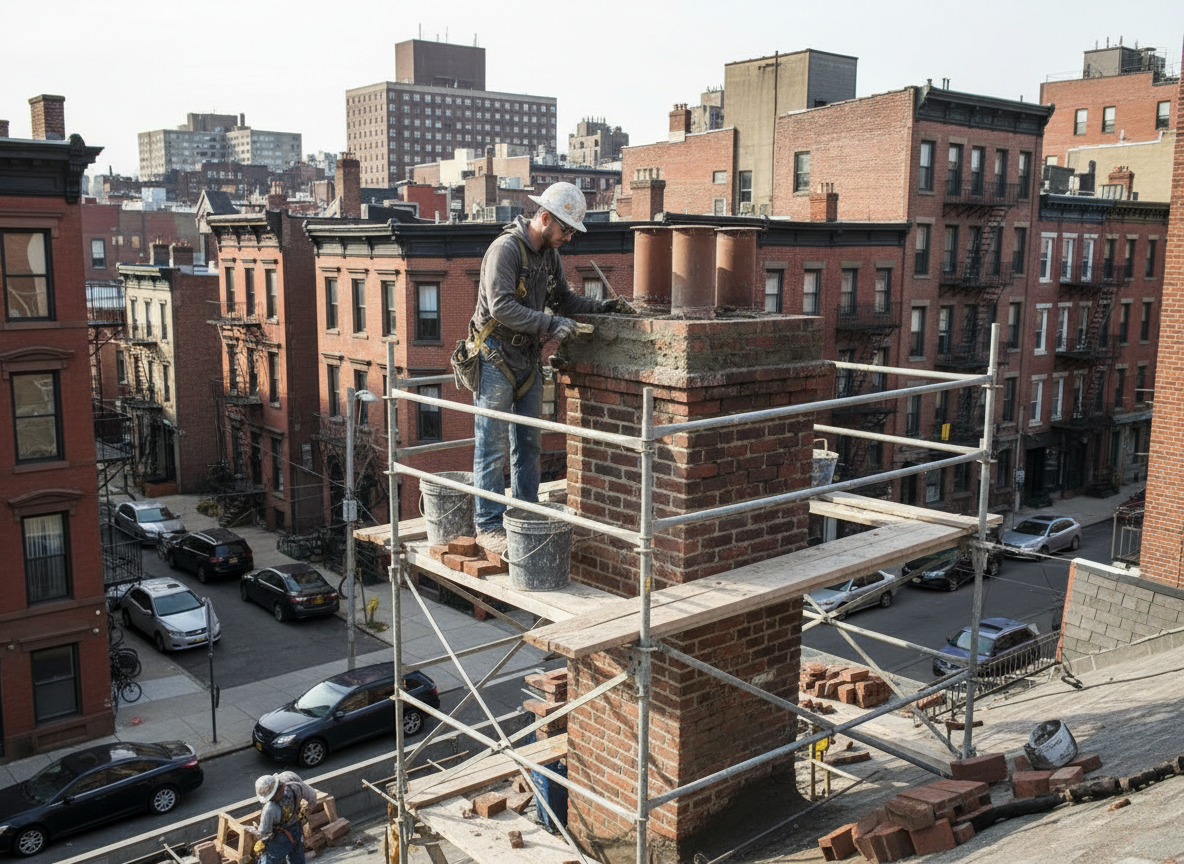
West New York sits in a humid subtropical climate where cold winters bring repeated freeze-thaw cycles that crack mortar joints and spall brick faces on chimneys built before the 1970s. Homes in The Heights and Downtown often have tall, exposed stacks that catch wind off the Hudson River Waterfront, accelerating water penetration through failed flashing. North Bergen and Union City share the same housing stock, so the same moisture-driven deterioration shows up on shared party-wall chimneys. Restoration starts with a full height inspection to locate hidden voids rather than patching only the visible crown.
We repoint with type N mortar matched to the original lime content so the softer brick can expand and contract without new cracking. When terra-cotta flue tiles have shifted from years of thermal shock, we install stainless-steel liners sized to the appliance rather than oversized clay replacements that trap creosote. Edge cases include chimneys leaning toward the river side because of uneven settling on the sloped terrain; these require bracing before any masonry work. All work stays within Hudson County permit rules for height and spark arrestors.
After structural repairs we apply a breathable siloxane sealer that lets vapor escape while blocking liquid water, critical in this waterfront microclimate. Homeowners in Riverwalk Place buildings see faster deterioration because constant HVAC exhaust keeps the flue warmer and drives more condensation higher up the stack. We always leave the job site broom clean and photograph every joint before and after so owners can verify the scope without guessing what was done inside the chase.
Technician insight
In West New York, the thing that catches most people out with chimney restoration is how quickly the Hudson River salt air plus freeze-thaw cycles open up joints on the river-facing side of The Heights chimneys. Homeowners usually notice only the crown, but water has already traveled down the flue and damaged the cleanout years earlier. We always pull the damper and camera the full height before quoting.
Leaning Stack In The Heights
A 1920s row house chimney in The Heights leaned visibly toward the river after decades of wind load. We found cracked mortar and shifted flue tiles allowing water into the second-floor chase. We installed internal bracing, repointed the full height with lime mortar, and added a stainless liner. The stack is now plumb and the homeowner reports no more water stains on the interior wall.
How it works
- 1
Full Height Inspection
We examine the chimney from crown to cleanout, checking for spalling, loose flashing, and flue alignment in West New York homes.
- 2
Mortar And Brick Repair
Failed joints are cut out and repointed; damaged brick is replaced with matching material to restore structural integrity.
- 3
Flue Lining Or Rebuild
When tiles are cracked we install a stainless liner sized to the appliance or rebuild the flue with new tiles as needed.
- 4
Waterproofing And Final Check
A breathable sealer is applied and the system is tested for draft and leaks before we leave the site.
Pricing
Upfront quotes after on-site inspection; price moves with height, liner needs, and extent of brick replacement.