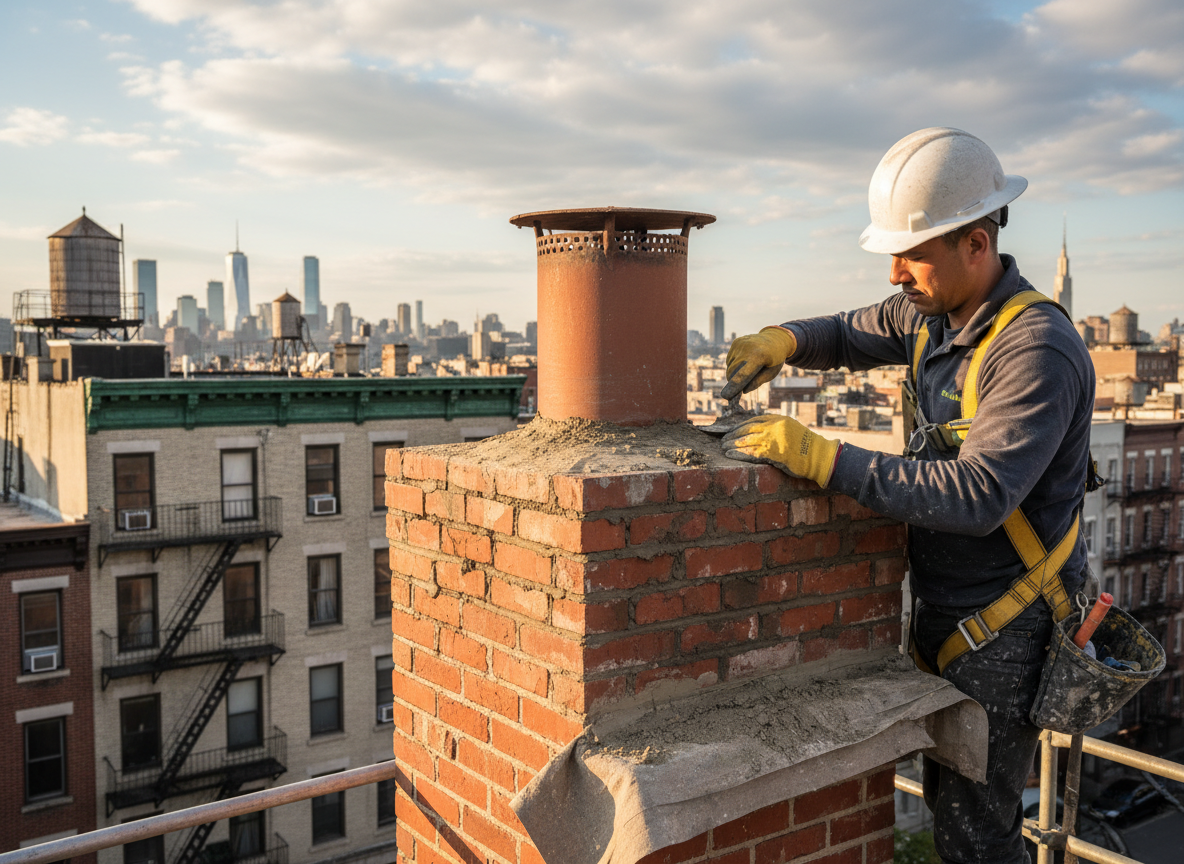
Chimney mortar in West New York homes takes constant punishment from the humid subtropical climate, where hot summers bake joints and cold winters drive repeated freeze-thaw cycles along the Hudson River Waterfront. Older brick structures common in The Heights and Downtown West New York often show spalling and recessed mortar lines because original lime-based mixes cannot handle the moisture that blows in from the river and pools near North Hudson Park. We match existing mortar composition and tuck-point only the damaged sections rather than coating entire flues, which preserves breathability and avoids trapping moisture behind a hard modern mix.
Access on these narrow lots frequently requires staging from the street or neighboring roofs in Union City and North Bergen borders, so we plan for tight clearances and shared chimney stacks that serve multiple units. Edge cases include parapet walls where water enters from the top and travels down into the flue, and chimneys that lean slightly due to the sloped terrain dropping toward the river. We always check for hidden flue liner damage before repointing because cracked mortar often signals deeper movement from soil settlement common in Hudson County waterfront fill.
Code compliance in West New York requires maintaining proper clearances and using compatible materials that will not accelerate deterioration on adjacent brick. Homeowners sometimes attempt DIY with pre-mixed bags sold at big-box stores, which cure too hard and crack within one season against the local temperature swings. We remove only failed mortar to sound material, then compact new mortar in thin lifts so it bonds without shrinking away from the bricks.
Seasonal timing matters here because summer heat can flash-cure mortar before it fully hydrates, while winter work demands cold-weather additives and tenting to prevent freezing. After repair we advise monitoring for efflorescence near the Hudson River Waterfront, which signals ongoing moisture that needs addressing at the crown or flashing before the next cycle of damage begins.
Technician insight
In West New York, the thing that catches most people out with chimney mortar repair is how quickly river humidity and freeze-thaw cycles reopen joints on the north-facing side of The Heights row homes. Homeowners often point only the visible south face and miss the hidden water entry that starts at the crown and travels down the shared flue line with the North Bergen neighbor.
The Heights Row Home North Wall Deterioration
Problem: recurring water stains inside a second-floor bedroom after heavy winter rain. What we found: recessed mortar on the north elevation of a 1920s brick chimney, with water tracking down the shared stack from a failed crown. What we did: removed deteriorated mortar on three sides, repointed with a lime-rich mix matched to the original, and sealed the crown joint. Outcome: no further interior moisture after the next freeze-thaw cycle.
How it works
- 1
Site Assessment
Inspect mortar joints, flue condition, and water entry points from the roof down to the smoke chamber on West New York properties.
- 2
Mortar Removal
Cut out deteriorated mortar to sound depth without damaging brick edges, paying special attention to shared stacks common in The Heights.
- 3
Mortar Mixing and Application
Prepare compatible lime or cement-lime mix matched to existing color and strength, then tuck-point in layers for proper bond.
- 4
Finishing and Protection
Tool joints to shed water, clean residue, and apply temporary covers if rain is forecast before full cure.
Pricing
Cost depends on chimney height, number of sides requiring work, and access difficulty on tight West New York lots; we provide upfront quotes after inspection.