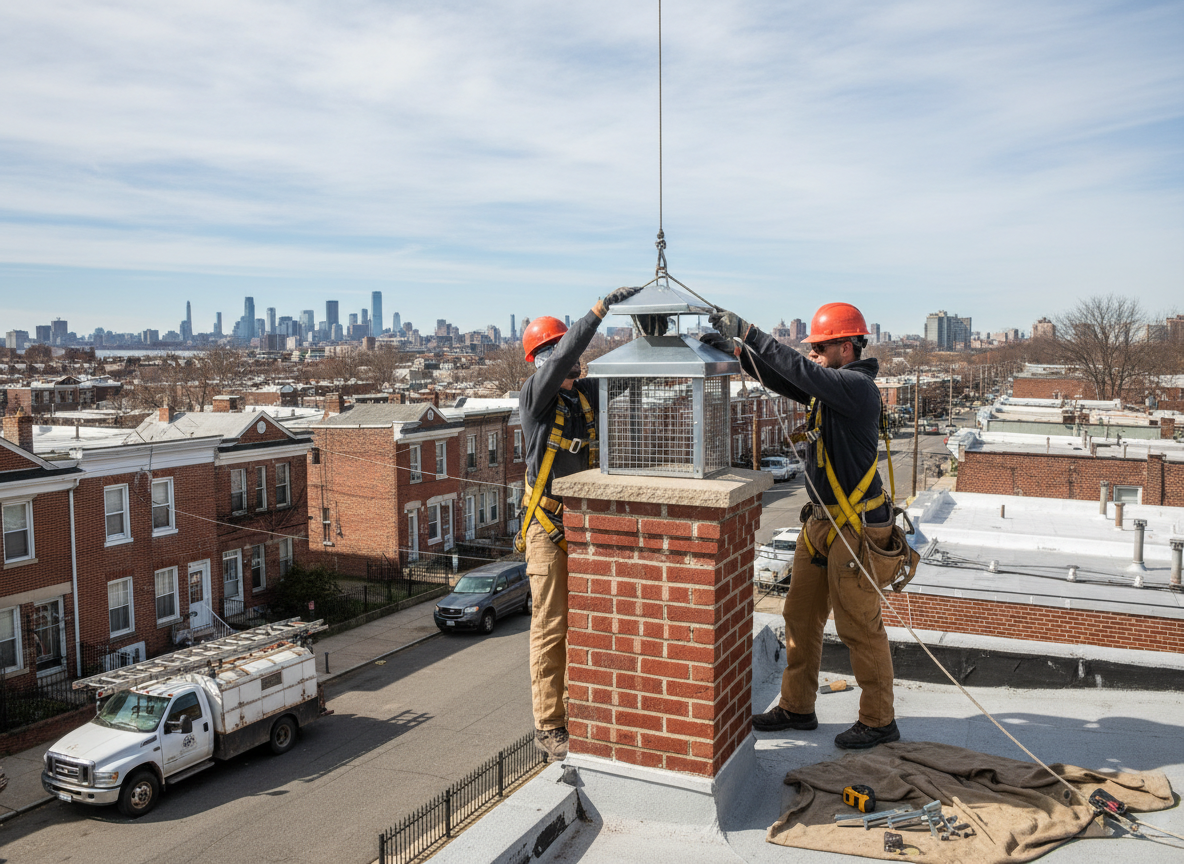
West New York sits in a humid subtropical climate where cold winters bring repeated freeze-thaw cycles that drive water deep into mortar joints on older brick chimneys common in The Heights and along the Hudson River Waterfront. A properly fitted cap blocks rain and snow while allowing exhaust to escape, but the constant moisture from the river accelerates corrosion on standard galvanized steel, so stainless steel or copper caps with tighter seams hold up better here than in drier inland spots like parts of Union City.
Many row homes and multi-family buildings in Downtown West New York have chimneys that exit through steep roofs with limited staging room. Installers must account for wind loads off the river that can loosen poorly secured caps and for the age of the masonry, which often shows prior water tracking that requires minor tuckpointing before the new cap can seat correctly. Skipping this step lets moisture re-enter the flue within one or two seasons.
Local codes in Hudson County require caps that maintain proper draft and prevent downdrafts in high-wind conditions near North Hudson Park. We size the cap to the exact flue dimensions after removing any existing damaged crown or collar, then secure it with stainless hardware rated for coastal exposure so it survives both summer humidity and winter ice loading without pulling away from the brick.
Seasonal Considerations
Chimney caps installed before winter in West New York must handle snow accumulation and ice dams that form along the waterfront. Summer installs focus on sealing against driving rain from afternoon thunderstorms that move up the Hudson, preventing the rapid rust that appears on lesser metals within two years.
Technician insight
In West New York, the thing that catches most people out with chimney cap installation is the constant wind off the Hudson River Waterfront that loosens standard hardware on older multi-story brick homes in The Heights; we always step up to heavier stainless anchors and check for hidden crown cracks that freeze-thaw cycles open every winter, something homeowners in Union City or North Bergen rarely see at the same frequency.
Missing Cap on Heights Row Home
Water was entering the flue of a three-story brick chimney in The Heights after the original cap blew off during a winter storm. We found cracked crown mortar and rust staining inside the flue. We rebuilt the collar, installed a stainless cap with river-rated fasteners, and sealed the joints. No further water tracking appeared after the next freeze-thaw cycle.
How it works
- 1
Site Assessment
We inspect the chimney crown, flue, and surrounding roof from the address at 55-1 Riverwalk Pl outward to note wind exposure and any existing water staining on interior walls.
- 2
Material Selection
Stainless or copper cap is chosen based on roof pitch and proximity to the river, then cut to match the exact flue opening found in older West New York brickwork.
- 3
Preparation and Sealing
Loose mortar is addressed, a new collar is formed if needed, and the cap is set with stainless fasteners rated for the humid conditions common along the Hudson River Waterfront.
- 4
Final Check and Documentation
Draft is verified, hardware torque is confirmed, and photos are provided showing the finished installation against the skyline visible from North Hudson Park.
Pricing
Price varies with chimney height, roof access in tight Downtown lots, and whether prior water damage requires extra masonry work before the cap can be seated.